
FDA and Fabian Society launch new AI report

Report co-authors Sasjkia Otto and Aoife Donaghy, alongside former No.10 Downing Street Innovation Fellow Alexander De Ville, and FDA General Secretary Dave Penman launch new joint FDA/Fabian Society report at FDA HQ in London.
On Monday 24 March, the FDA in partnership with the Fabian Society think tank published a new report about the adoption of artificial intelligence technologies within the civil service. The event took place at the FDA’s HQ in London, attended by members both online and in-person, and was chaired by Editor of PublicTechnology, Sam Trendall.
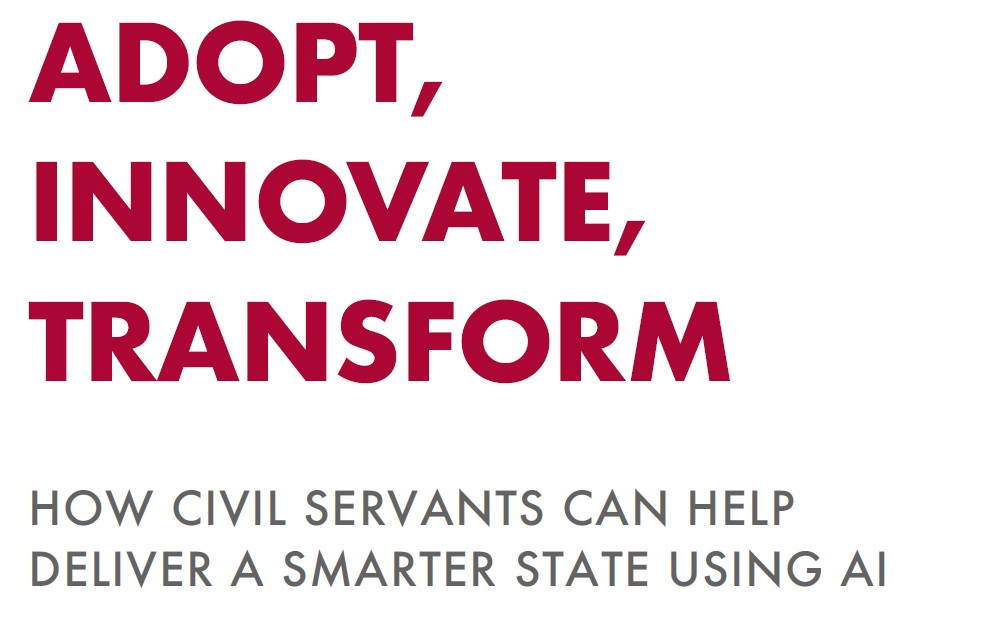
Adopt, Innovate, Transform: how civil servants can help to deliver a smarter state warns that the “rewire the state” agenda will falter without access to the right technologies, proper training, credible incentives, less bureaucracy – and a serious effort to work in partnership with staff and unions.
The report highlights that FDA members do not want to be blockers of progress, rather they believe that, used well, AI could cut routine administration, free up time for higher-value work and help redesign public services around the public.
The FDA’s former Research Intern and co-author of the report, Aoife Donaghy, introduced ‘Adopt, Innovation, Transformation’, and presented key findings from the survey of 2,067 civil servants featured in the report:

- 66% of civil servants that responded to the survey said they would like to be more involved with how their organisation adopts it, with only 29% saying they have been consulted on its use at work.
- 72% of respondents have either already introduced AI to how their team does things, or would like to do so in future. However, 79% of respondents are at least slightly concerned about AI use in their organisation.
Senior Researcher at the Fabian Society and co-author of the report Sasjkia Otto outlined to attendees the report’s main five asks of government to help encourage successful AI adoption.
- Clarify a vision and the mechanisms for delivering it. The government must engage workers and trade unions to co-create and communicate a vision, and then mobilise the machinery of government to deliver it.
- Ensure everyone has access to the right technology. The government must take steps to understand gaps and reform procurement to improve access to both conventional technology and AI – including by monitoring and scaling effective solutions.
- Cultivate talent strategically. The government must map existing skills, establish progression pathways, promote multidisciplinary leadership to deliver complex cross-government transformation, and raise pay strategically to get the right people in the right roles.
- Support and incentivise workers to make things better. The government must implement targeted support to help innovators get things done and ensure that they are properly rewarded.
- Make AI synonymous with good and meaningful work. The government must work with unions to establish clarity on protections, evaluate the impact on workers, and use technology to create efficient ways for workers to understand and feed back on AI use.
Also on the panel was Alexander De Ville, the former Number 10 Downing Street Innovation Fellow and current DSIT Deputy Director working on AI adoption. De Ville highlighted that the UK has one of the strongest policy environments for the use of AI, with ministers on board with its adoption. He highlighted that Prime Minister Sir Keir Starmer has said he “wants to mainline AI into the veins of the civil service”.
De Ville added that the report and survey also show a clear picture of civil servants having an appetite for AI, 72% having already introduced it or wanting to do so in the future.
He argued o successfully adopt AI and deliver a smarter state, there needs to be a better connect between this base of eager civil servants and the enthusiasm of ministers.
FDA General Secretary told attendees that adopting AI in public services will only be successful if we make these technologies synonymous with good meaningful work. He argued that “this can be achieved if the government works with unions to ensure that the concerns of staff who are more cautious around AI use are addressed.”
Penman agreed with Otto’s statement that we must ensure AI “translates into better working conditions. We want trade unions to be able to inspect how AI is used in HR systems, and we want civil servants to have access to digital tools in… different parts of their roles to feedback”.

The General Secretary championed the report’s aim to use AI to “reimagine and transform public services to make them more human”. He continued: “the opportunity here is for committed and professional public servants to deliver high quality public services, because the human aspect of that is freed up… and people can make better choices, better decisions, quality decisions, quality interaction, and we need a human as professional that understands what we’re doing”.
He added “everything in this report suggests that there is an enormous appetite to do that”.
The event and report was covered in Civil Service World and Politco.
Latest news
-
Back civil servants to ‘rewire Whitehall’, report urges
Involve civil servants and properly invest in AI to achieve the productivity and savings the government seeks, a new report from the FDA and the Fabian Society argues.
-

Calls for significant cuts to the NI public sector workforce risks “scapegoating” NICS
The FDA’s National Officer for Northern Ireland Robert Murtagh has pushed back against calls for significant cuts to the public sector workforce in Northern Ireland.
-

FDA responds to Reform UK plans for political civil service appointments
The FDA has responded to reports that Reform UK plans to replace permanent secretaries and directors general with political appointees, if elected to government.


