
TUC backs the FDA’s call for flexible working

The FDA’s call for the government to promote flexible working at every level across the public sector has been backed by the TUC.
Delegates at this year’s TUC Congress voted in favour of the FDA’s motion, which called on the government and employers to not only introduce a ‘day one’ right to flexible working, but to also:
i. Advertise how roles can be worked flexibly, with explicit examples provided in job descriptions;
ii. Separate out remote working policies from flexible working provisions;
iii. Promote flexible working at senior levels, encouraging a more inclusive
workplace; and
iv. Promote flexible working within public services and encourage private sector employers to offer it to all workers as a positive workforce measure.
Moving the motion, FDA President Fiona Eadie told delegates that FDA members “don’t need to be chained to a desk to do their jobs” but face barriers to flexible working because “there’s still a misconception that if they’re not visible in the office they can’t possibly be delivering”.
“We know that flexible working not only allows parents to pick up their children from school, but also allows carers to attend hospital appointments and others to proactively manage their mental health,” she explained. “It means people with disabilities can work from home when they need to. In short, flexible working allows people to balance their work around their life, without a detriment to either… The 9-5 doesn’t work for everyone – and isn’t even necessary. People should be recruited on their merit, not just their time-sheet.”
The motion follows research, commissioned by the FDA in partnership with the Global Institute for Women’s Leadership (GIWL), to find out what flexible working really looks like today. It found that nearly 50% of respondents felt that working part-time means their work is more likely to spill over in to other areas of their life, while 30% of respondents who felt that flexible working was not encouraged at their grade were working an additional 10 or more hours a week.
Additionally, 35% of part-time women thought that working flexibly had a negative impact on their career progression or performance ratings.
The full research will be launched at an FDA Centenary Lecture on 26 September, delivered by Julia Gillard, Chair of the GIWL and former Prime Minister of Australia.
Eadie also spoke in support of Unison’s motion on smashing the gender pay gap, which was also carried by TUC Congress.
“The gender pay gap is a scandal,” the President said. “It is especially shameful that if you are a BME woman, an LGBT+ woman or a disabled woman, the pay gap you face is even more significant than that of your white, cisgender and heterosexual or able bodied peers.
“The FDA wants employers to report pay gaps for black and ethnic minority workers, LGBT+ workers and disabled workers,” Eadie continued, “and this data collection will allow for better targeted campaigning to reduce wage inequality across the country.”
Related News
-
Polanski’s call to abolish Ofsted “ignores the evidence”, says FDA
FDA General Secretary Dave Penman responds to Leader of the Green Party of England and Wales Zack Polanksi’s call to abolish Ofsted.
-

FDA response to the Minister for Education’s written ministerial statement
FDA National Officer for Northern Ireland comments on the written ministerial statement made by Minister for Education Paul Givan this afternoon.
-
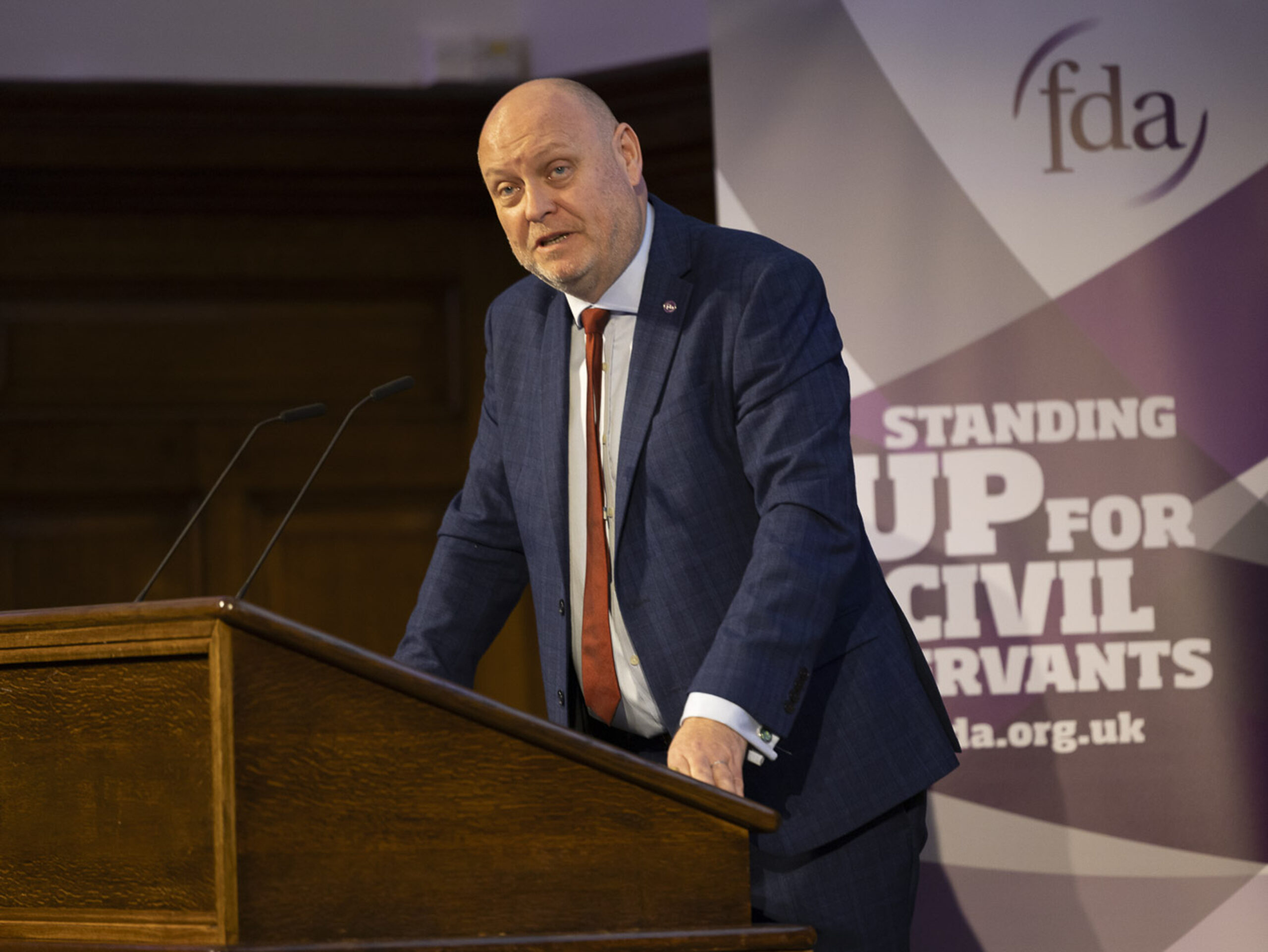
Penman re-elected
Earlier this month, it was confirmed that Dave Penman had been re-elected as General Secretary of the FDA.


